
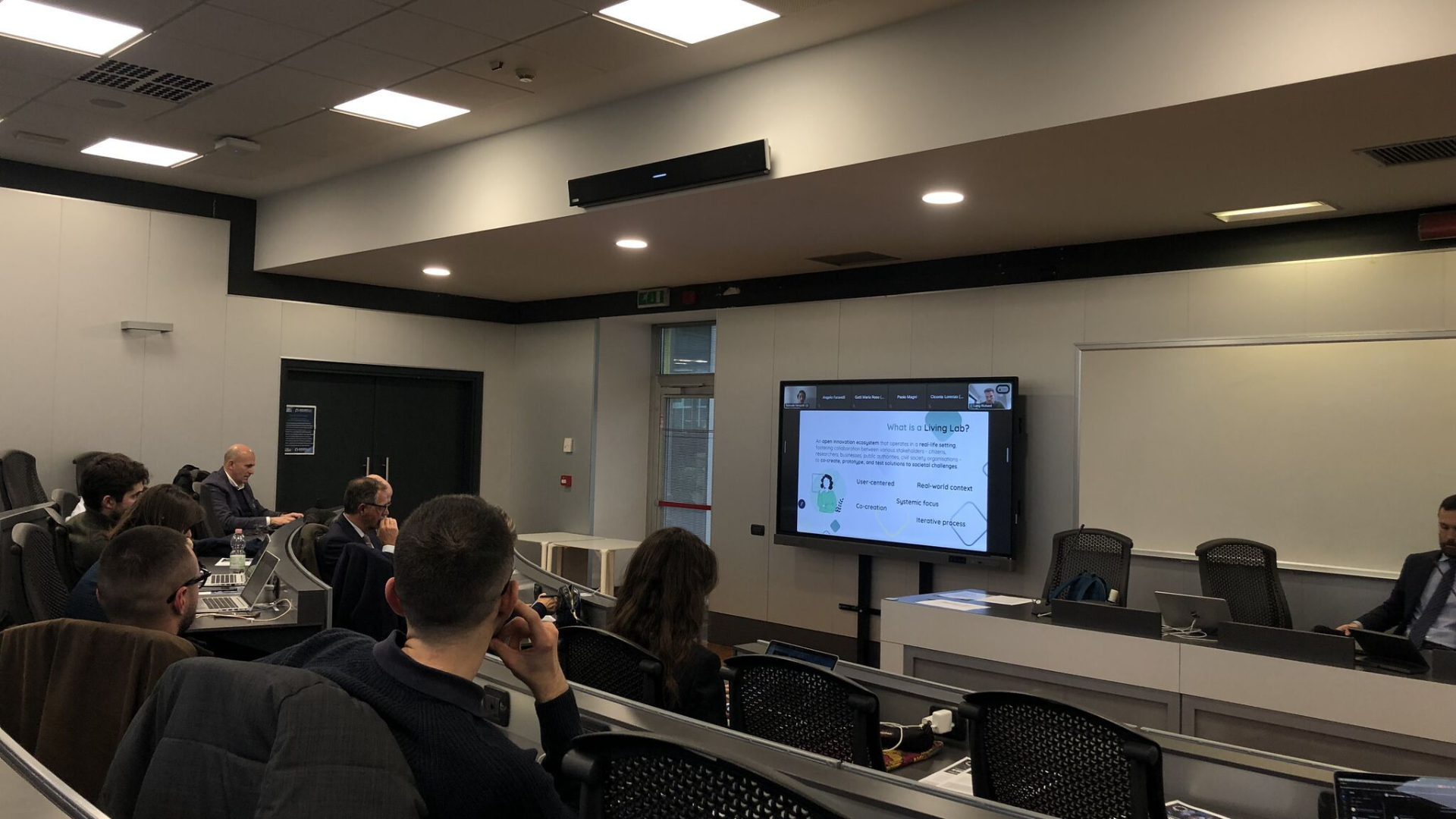
Milan Smart City Workshop
On 14 January, the ASSETS Project participated in the workshop “Rigenerazione urbana e impatto sociale nelle Smart City: il cittadino al centro” (Urban Regeneration and Social Impact in Smart Cities: the Citizen at the Centre), organised by the Smart City Observatory of the Politecnico di Milano. The event brought together researchers, policymakers, social economy organisations, and urban innovation practitioners to explore how cities can combine technological innovation with social impact to create more inclusive urban environments.
A central contribution to the discussion was the presentation of the Bolzano Living Lab, delivered by Professor Richard Lang and Samuele Verucchi from Cooperativa Sole. Their presentation demonstrated how living lab methodologies can support urban regeneration by integrating social innovation alongside technological solutions. Rather than focusing exclusively on digital infrastructure or smart technologies, the Bolzano initiative highlights the importance of community engagement, collaborative governance, and inclusive design processes.
The Bolzano Living Lab operates as a multi-stakeholder platform, bringing together public institutions, social economy actors, researchers, and local communities to co-design urban regeneration strategies. A key focus of the initiative is collaborative housing, which places residents at the centre of neighbourhood transformation while fostering social cohesion and long-term sustainability. The living lab approach also strengthens awareness of social impact evaluation, ensuring that regeneration projects are assessed not only for economic or technological outcomes but also for their societal benefits.
Discussions during the workshop reinforced an essential takeaway: smart city initiatives deliver lasting value only when citizen centricity, social value creation, and long-term governance frameworks are treated as core design principles rather than secondary considerations. By promoting participatory innovation models such as living labs, the ASSETS Project continues to demonstrate how social economy actors can play a decisive role in shaping inclusive and resilient smart cities across Europe.